Adults' jiu-jitsu
Jiu-jitsu belts
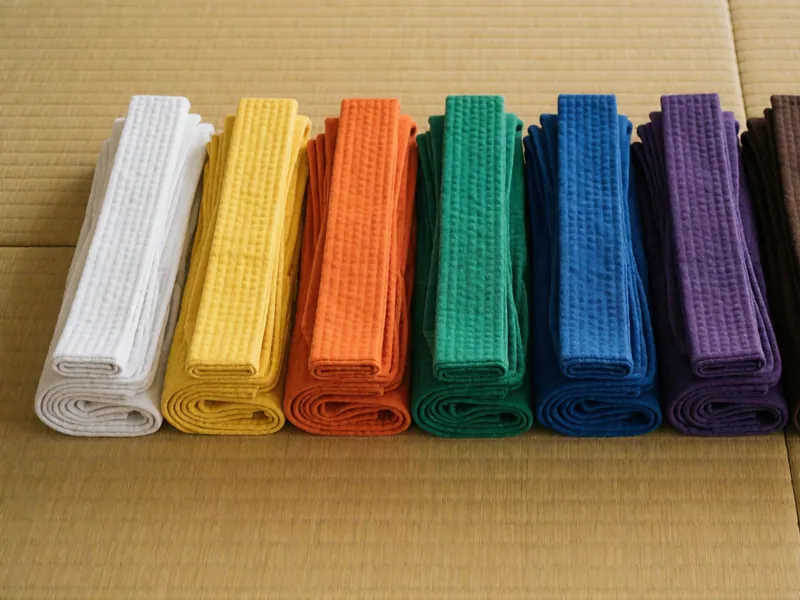
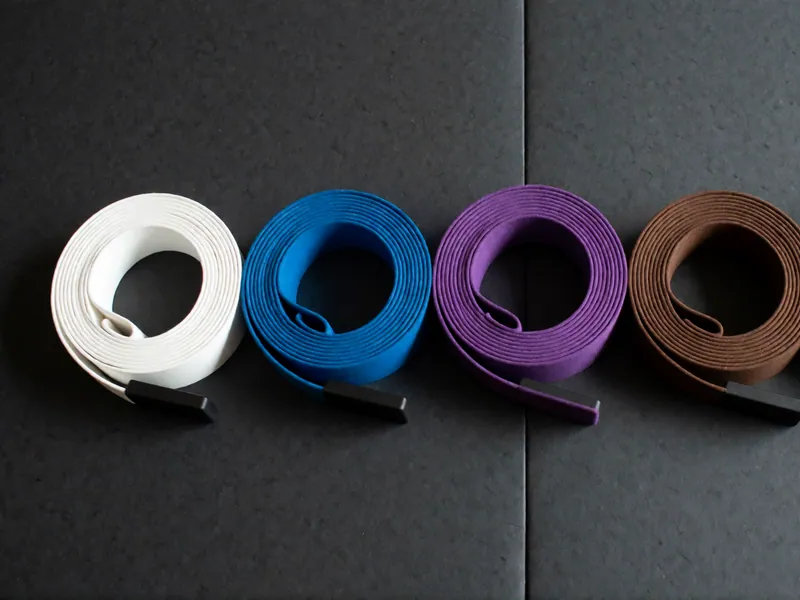
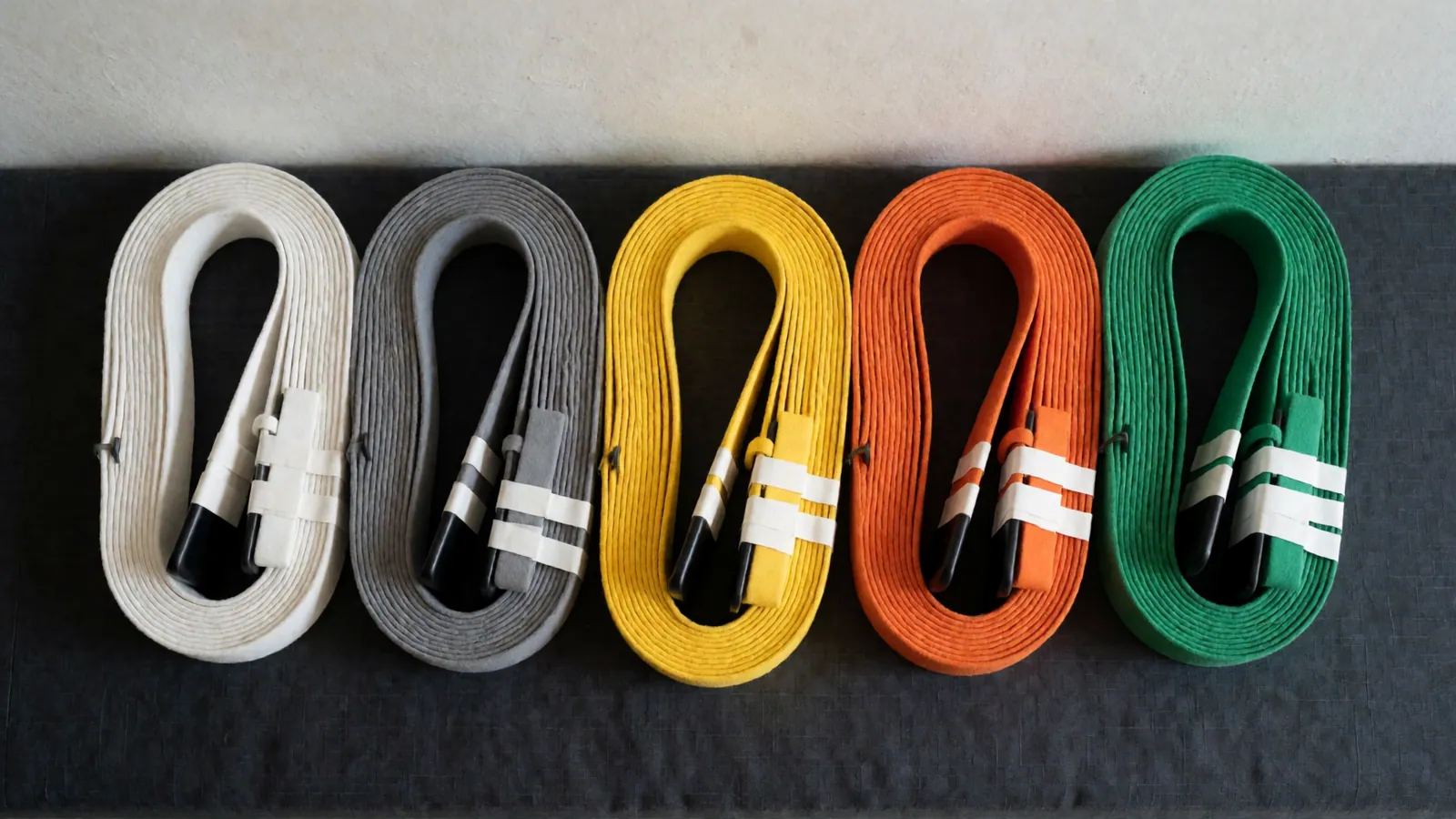
Five belts: white, blue, purple, brown and black, with up to four stripes on each belt below black. Children have a ladder of their own: white, gray, yellow, orange and green.
One free class, once a year per person, no card.
37-32 61st Street, Woodside, NY 11377
Belts
Our own curriculum, the minimum times printed, and no fee for a belt, a stripe or a grade.
AI-generated illustration. Not a real school.
Nothing more, and nothing less. It is a record kept by the people who taught you.
Our own curriculum. Our belts follow our own curriculum. A grade shows what you've learned here; it isn't a license, a certification or a rank recognized by any outside organization. New York doesn't license martial arts instructors, and each school sets its own grades.
What a rank is. A rank says what one instructor saw in another over years; it is not a license, nobody in New York issues one, and this site names nobody who awarded one.
Nothing to pay for a belt. There is no registration fee and no grading fee: belts and stripes are part of the membership.
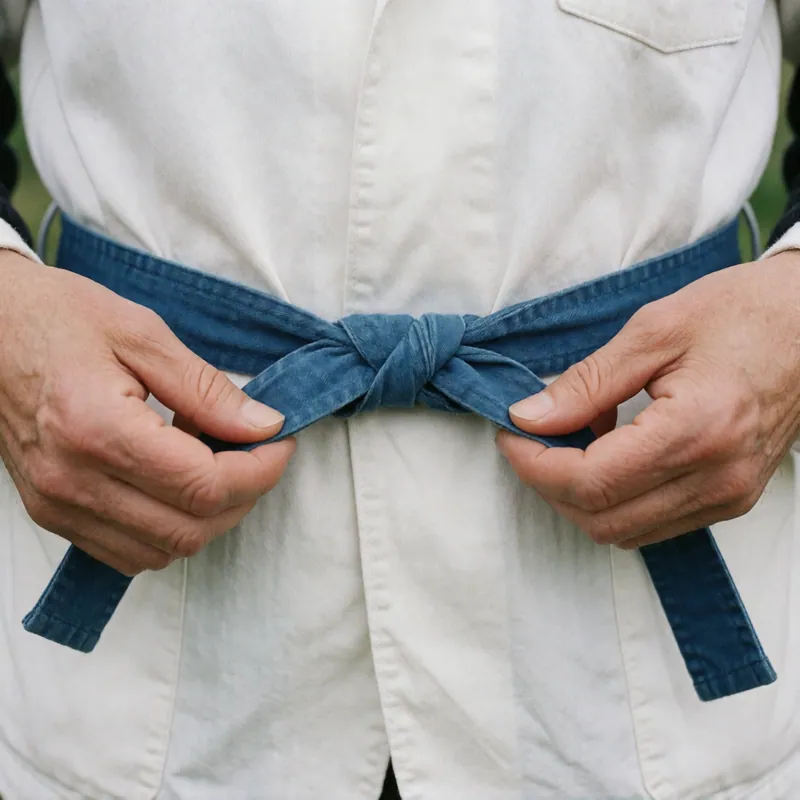 AI-generated illustration. Not a real student, instructor or school.
Jiu-jitsu and karate have belts, in ladders printed here in full. Muay Thai has none, and we add none.
Adults' jiu-jitsu
Five belts: white, blue, purple, brown and black, with up to four stripes on each belt below black. Children have a ladder of their own: white, gray, yellow, orange and green.
Karate, children and adults
Eight belts: white, yellow, orange, green, blue, purple, brown and black.
Muay Thai
Three stages, and no belts: fundamentals, all levels and technical sparring.
Three instructors, each in their own art, and never for a fee.
Mateus awards the jiu-jitsu belts and stripes here, on the three promotion days a year.
Keiko runs the karate gradings, at the end of each term, in ordinary class time.
Noel decides who is ready for the sparring class, and says so to each person directly.
A jiu-jitsu belt takes years, so the time between belts is marked with stripes: short bands of tape on the end of the belt.
On the children's ladder, a stripe comes after about three months of regular training, twice a week or more, and a new belt after nine months at the least.
For adults, there is no exam day. The head instructor watches attendance and sparring over months, and announces promotions on three promotion days a year, in January, May and September. The minimum times mirror widely used ones; most people take longer, and nobody is promised a belt by a date.
| Belt | At least |
|---|---|
| White | eighteen months |
| Blue | two years |
| Purple | eighteen months |
| Brown | a year |
A school that sells its belts as somebody else's certificate is selling the certificate. Ours are what one instructor has watched you learn, written down where you can read the rules before you start.
Book your trial class, free once a year per person with no card and nothing to cancel afterwards, into a real class on the timetable. For a child's class or a course, ask for a place, and if it is full you join its waiting list in order.