A demonstration site — this school and its instructors are not real.
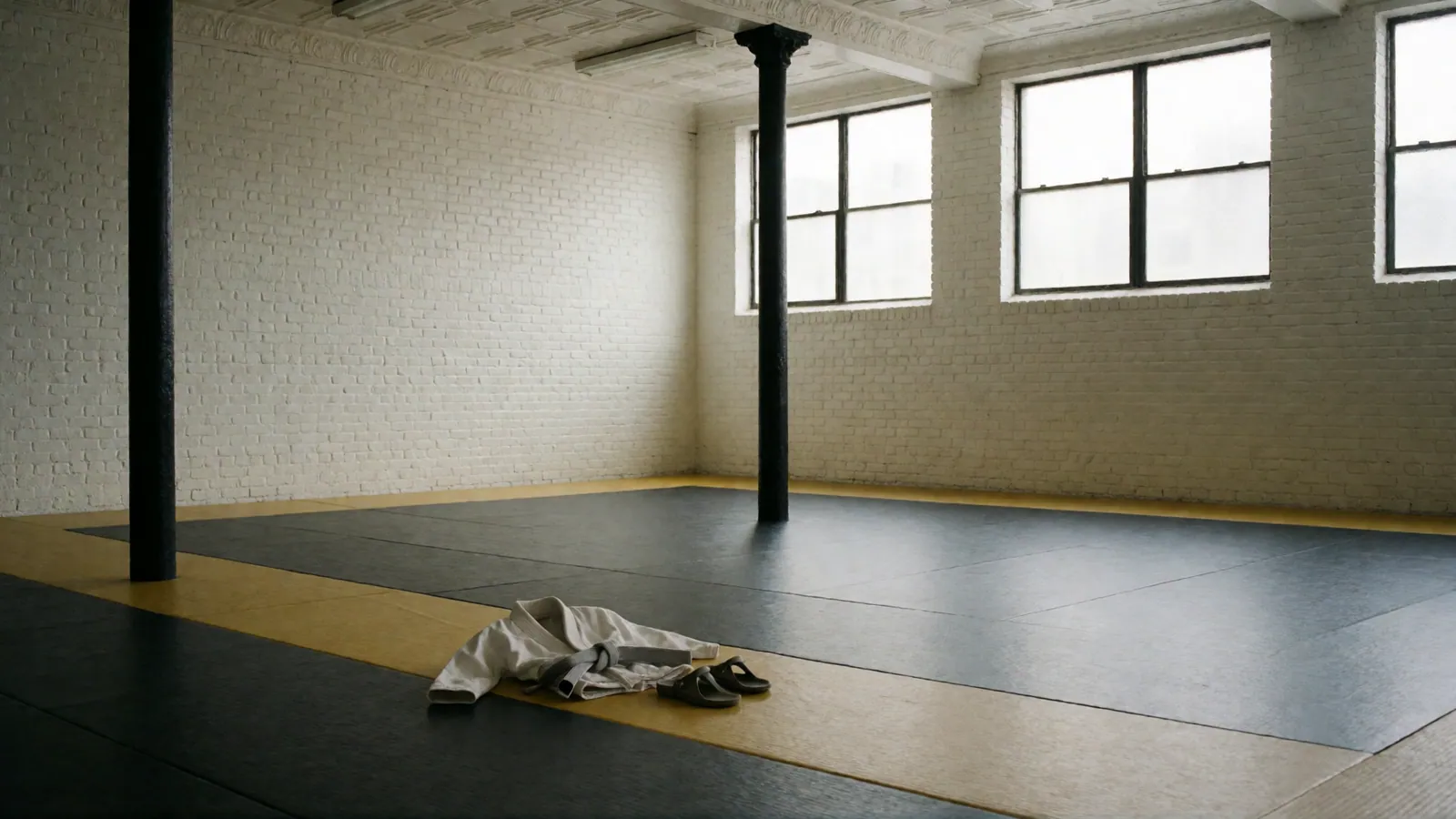
A small white jiu-jitsu jacket with a gray belt and a small pair of rubber sandals on the straw-gold edge of the empty mat.

Children and teens

Kids' Brazilian jiu-jitsu in Woodside, Queens, for ages 7 to 13

Falling, escaping and holding, learned as games, then short rounds with a partner the same size.

  • $129 a month plus tax
  • Ages 7 to 9 and 10 to 13
  • Four classes a week on the timetable

AI-generated illustration. Not a real school.

Holding and escaping, without a strike

Jiu-jitsu for children is falling, getting out from underneath somebody, and holding a position without hurting the partner who is in it. A round stops the moment either child taps, and that is the first rule taught.

Marisol Ocampo sets the children's classes' rules: the count, the turns, the safe falls, and the door at collection time.

  • Two groups: juniors of seven to nine and seniors of ten to thirteen.
  • No strikes at all: jiu-jitsu is holding and escaping.
  • Partners are matched by size and experience for every round.
  • Belts follow our own children's ladder, white to green.

Two classes on this page

Each with its own age band and its place on the timetable.

  • Kids' Jiu-Jitsu, Juniors

    Jiu-jitsu for seven to nine: falling, escapes and holds as games, then short positional rounds with a matched partner. Ages 7 to 9.

  • Kids' Jiu-Jitsu, Seniors

    Jiu-jitsu for ten to thirteen: technique shown and drilled, then supervised positional sparring. Ages 10 to 13.

What a class is made of

  1. Moving on the mat

    Rolls, hip escapes and falls, as games for the younger group and as drills for the older one.

  2. One technique

    Shown, then tried slowly with a partner, then tried again with the partner moving a little.

  3. Positional rounds

    Short rounds that start from one position, each child with a partner of a similar size, and the adults on the mat watching.

  4. The tap

    A child taps the partner or the mat to stop, and the partner lets go at once. The instructor watches for it in every round.

When, where and how many

Every class on this page, with its room, its instructor and its capacity.

Every capacity is the room's or the class's own limit, and the trial places are part of it.
WhenClassTeachesCapacityPlaces
Monday4:50 pm to 5:35 pmKids' Jiu-Jitsu, Juniors7 to 9 · The main matMarisol16Fixed placestwo trial places
Monday5:45 pm to 6:45 pmKids' Jiu-Jitsu, Seniors10 to 13 · The main matMarisol16Fixed placestwo trial places
Wednesday4:50 pm to 5:35 pmKids' Jiu-Jitsu, Juniors7 to 9 · The main matMarisol16Fixed placestwo trial places
Wednesday5:45 pm to 6:45 pmKids' Jiu-Jitsu, Seniors10 to 13 · The main matMarisol16Fixed placestwo trial places

The whole week

Who teaches it

A rank says what one instructor saw in another over years; it is not a license, nobody in New York issues one, and this site names nobody who awarded one.

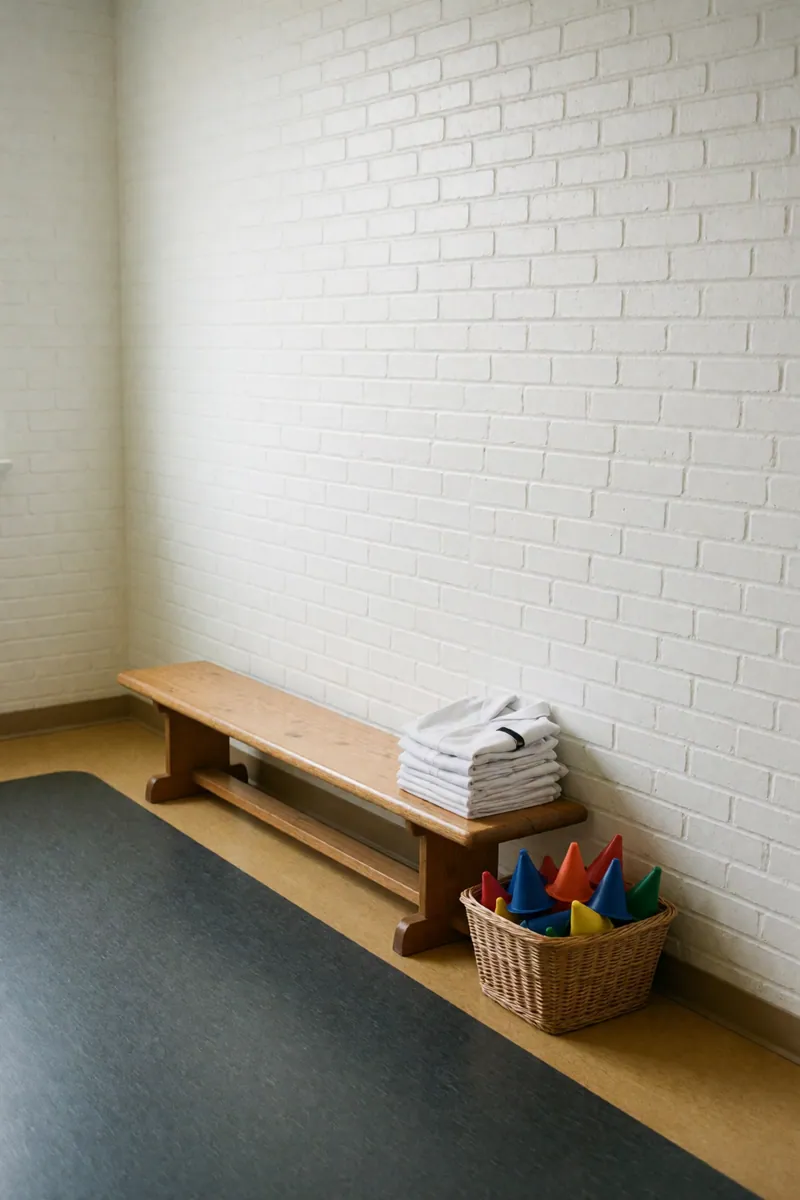
A tall view of a low wooden bench at the edge of the mat with a stack of small folded white uniforms and a basket of small colored cones beside it.AI-generated illustration. Not a real school.

Marisol Ocampo

Children's program lead · Brown belt in Brazilian jiu-jitsu

Leads the children's program: Early Steps, the children's jiu-jitsu and the Friday open mat.

English and Spanish · Eight classes a week

Marisol's classes

What it costs

Every price on this site is printed with New York City's 4.5% sales tax beside it, as its own line. Nothing is paid on this website.

  • $129 children 7 to 13, two classes, one month Plus $5.81 New York City sales tax: $134.81 in all.
  • Two fixed weekly classes.
  • Memberships run for one month at a time and never renew automatically. To carry on, you sign up for the next month at the desk. If you don't, your membership simply ends, with nothing more to pay.
  • There is no registration fee and no grading fee: belts and stripes are part of the membership.
  • A second and every later member of one family pays $15 less on their own agreement, every month.

Every plan and price   Why it is one month at a time

Said plainly

Not child care. These are martial arts classes, not child care. For our 4 to 6 group, a parent or another adult you choose stays in the waiting area during class. For older children, please drop off and collect at the door at the class times; we don't collect children from school and we don't run camps.

What children practice here. Children learn to listen to a count, take turns, fall safely, look after a partner and try again after a correction. What that becomes outside the school depends on the child, so we promise nothing about confidence, focus, behavior or grades.

Who teaches children. We check every instructor against the New York and national sex offender registries before they teach, and again every five years.

Our own curriculum. Our belts follow our own curriculum. A grade shows what you've learned here; it isn't a license, a certification or a rank recognized by any outside organization. New York doesn't license martial arts instructors, and each school sets its own grades.

Starting

A trial class, a place, or both: the links below take the class with them.

Kids' Jiu-Jitsu, Juniors

Ages 7 to 9

A trial class first if you like, then a fixed place, or a place on the waiting list if the class is full.

Kids' Jiu-Jitsu, Seniors

Ages 10 to 13

A trial class first if you like, then a fixed place, or a place on the waiting list if the class is full.

Try one class first

Book your trial class, free once a year per person with no card and nothing to cancel afterwards, into a real class on the timetable. For a child's class or a course, ask for a place, and if it is full you join its waiting list in order.