Belts
Jiu-jitsu belts at Woodside Dojo: our own ladder
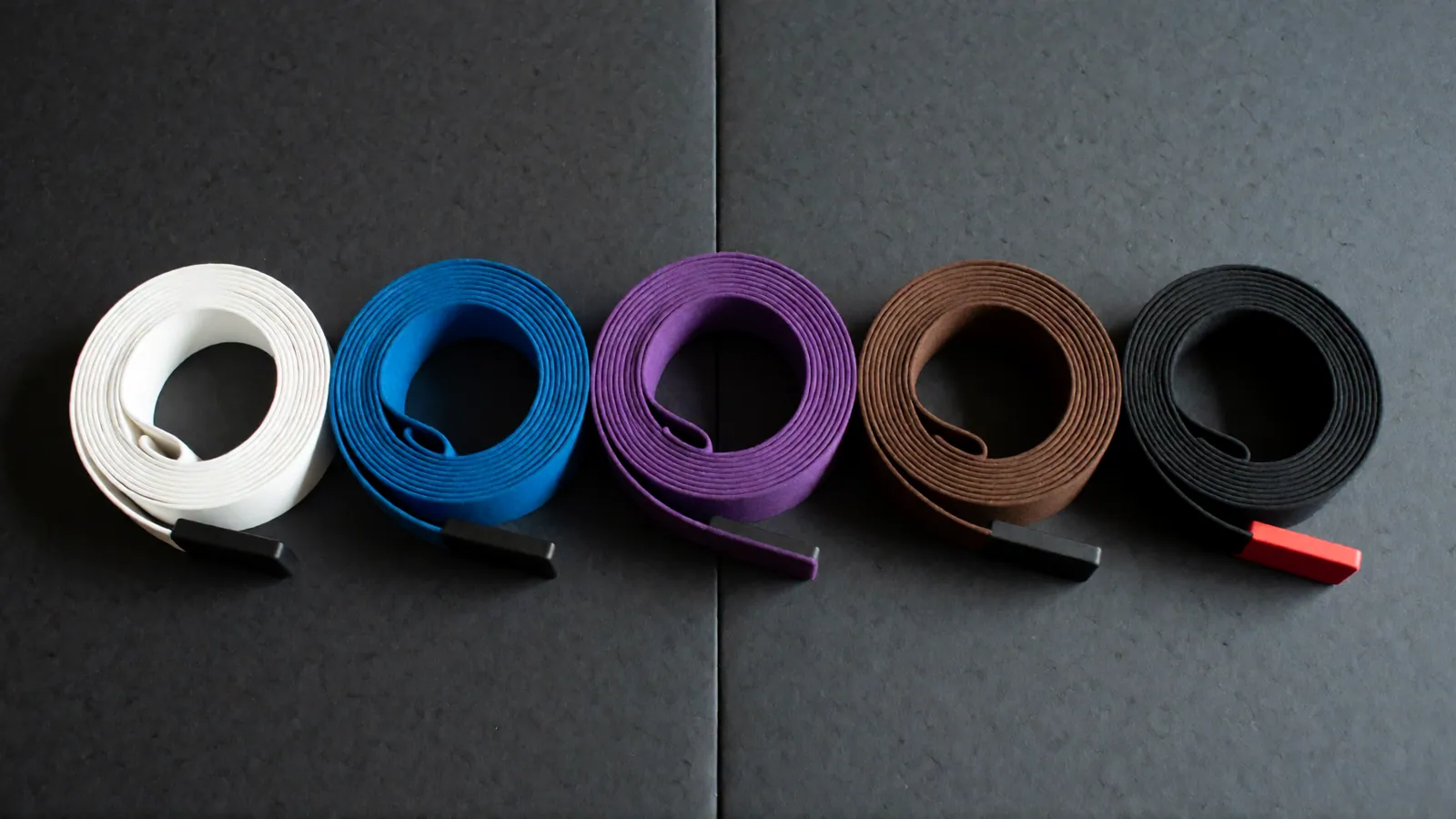
Five belts: white, blue, purple, brown and black, with up to four stripes on each belt below black. Children have a ladder of their own.
AI-generated illustration. Not a real school.
Adults' jiu-jitsu
Five belts: white, blue, purple, brown and black, with up to four stripes on each belt below black.
- Whitefour stripes
- Bluefour stripes
- Purplefour stripes
- Brownfour stripes
- Black
There is no exam day. The head instructor watches attendance and sparring over months, and announces promotions on three promotion days a year, in January, May and September. The minimum times mirror widely used ones; most people take longer, and nobody is promised a belt by a date.
| Belt | At least |
|---|---|
| White | eighteen months |
| Blue | two years |
| Purple | eighteen months |
| Brown | a year |
Mateus Arendt
Mateus awards the jiu-jitsu belts and stripes here, on the three promotion days a year.
Children's jiu-jitsu, 7 to 13
Five belts: white, gray, yellow, orange and green, with up to four stripes on each belt below green.
- Whitefour stripes
- Grayfour stripes
- Yellowfour stripes
- Orangefour stripes
- Green
A stripe comes after about three months of regular training, twice a week or more, and a new belt after nine months at the least. The colors and the minimum ages for them are the widely used ones: gray from four, yellow from seven, orange from ten, green from thirteen. Early Steps children stay on white, collecting stripes.
What a stripe means
A stripe says the instructor has seen steady training and steady progress since the last one. It is not a test you sit or a fee you pay.
A belt is the same judgment over a longer time: the positions you can reach and hold, the escapes you can find, and how you train with a partner.
Our own curriculum. Our belts follow our own curriculum. A grade shows what you've learned here; it isn't a license, a certification or a rank recognized by any outside organization. New York doesn't license martial arts instructors, and each school sets its own grades.
Nothing to pay for a belt. There is no registration fee and no grading fee: belts and stripes are part of the membership.
Try one class first
Book your trial class, free once a year per person with no card and nothing to cancel afterwards, into a real class on the timetable. For a child's class or a course, ask for a place, and if it is full you join its waiting list in order.